Tickets
 Shop
Shop









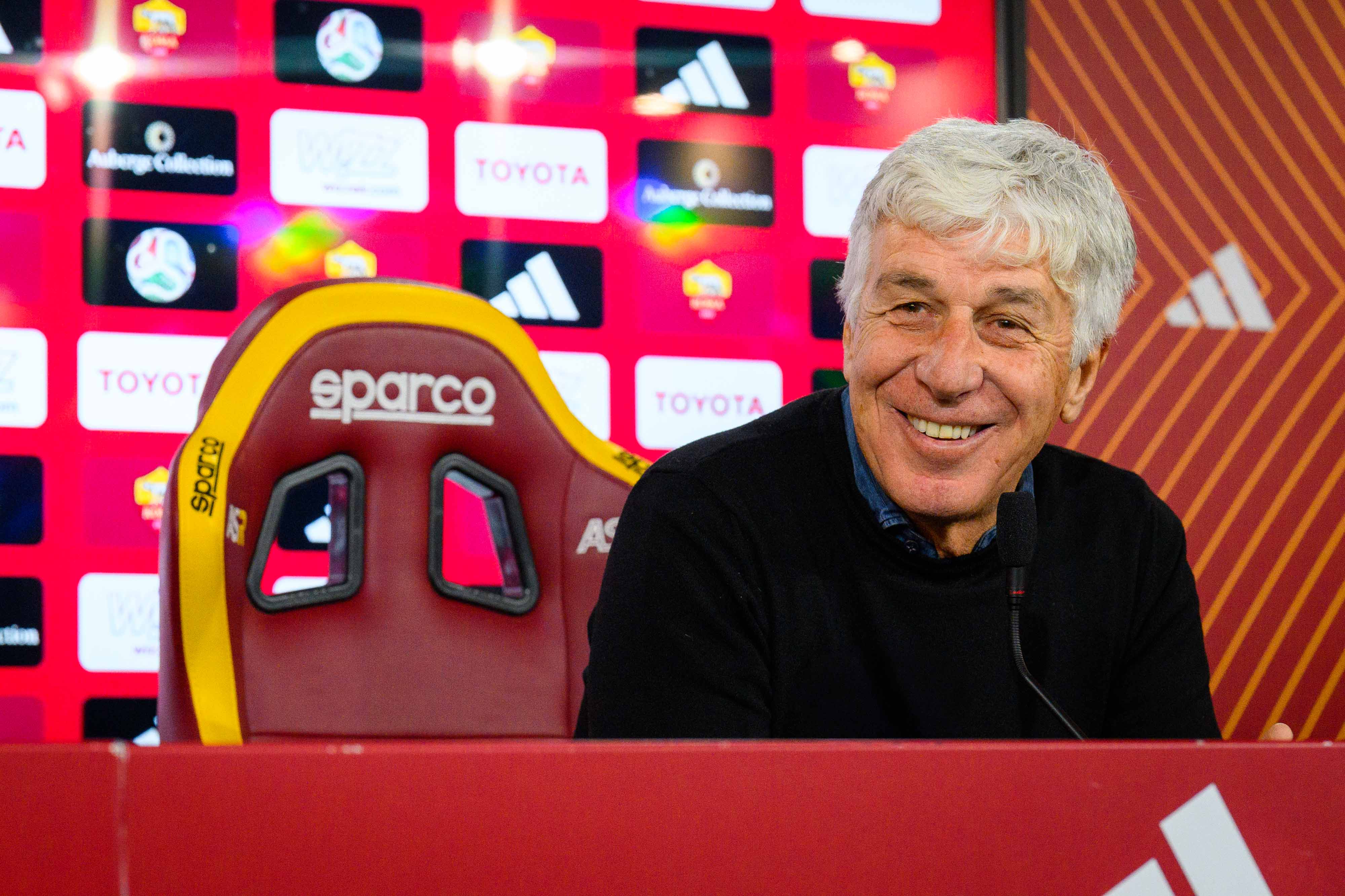
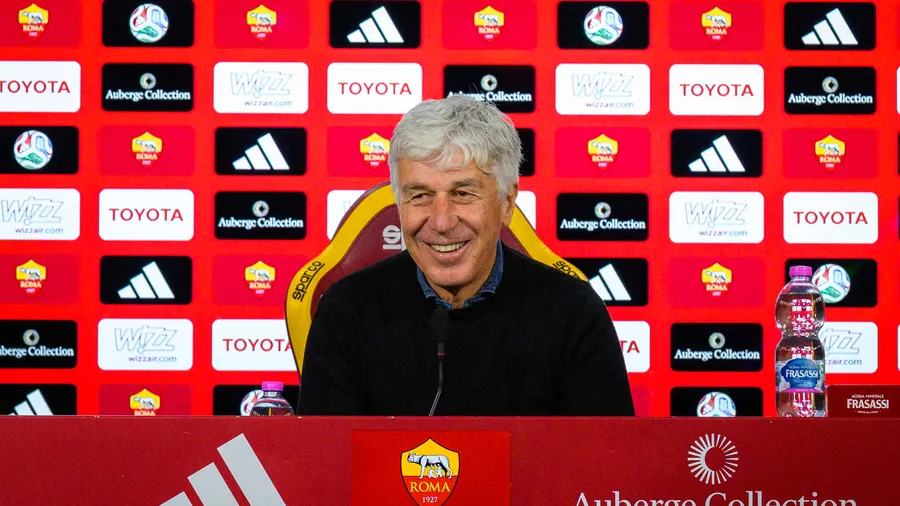
Gian Piero Gasperini spoke to the press the day before Roma visit Atalanta on Serie A Matchday 18.
Read what the boss had to say.
There's a bit of flu going around. How are things in the dressing room and who's going to make the squad? And how does it feel to be going back to Bergamo after nine seasons there?
“[Lorenzo] Pellegrini and [Leon] Bailey have got the flu, although they were injured anyway. [Niccolo] Pisilli should recover, hopefully. [Mario] Hermoso has recovered and we need to look at Wesley, who has a few niggles. There's quite a bit going on and we'll need to make some decisions but I'm sure we'll try to get everyone fit for a match like this. We'll be highly motivated.
“As for Bergamo, I'm very happy to go back. I spent nine years there. Atalanta is a wonderful story and there'll be time to tell it. Key to it all is Antonio Percassi: it all started with him. We went a long way together, with lots of different teams. We kept growing. There was mutual respect and great harmony. The only reason, of the many things that have been said, is that at a certain point the ownership changed and understandably the position of the coach changed – he was judged differently. We reached our targets. I don't know if winning the Europa League was the highest point of a very rich club that had made huge capital gains. The really unusual thing about Atalanta is that we got results and made a profit. That's what was so incredible about Atalanta – the constant growth – and I think it annoyed some people. A businessman with such a talent for growth, in a small city with a close bond between club, team and fans. I tried to leave at the highest possible point, in the Champions League, third in the table, with a very strong squad, a rich club that was able to sell [Mateo] Retegui, [Matteo] Ruggeri and [Roberto] Piccoli without upsetting the wealth of players at their disposal: [Marco] Carnesecchi, [Giorgio] Scalvini, Ederson, [Ademola] Lookman and others, all wonderful people who I'm be happy to meet again. The same goes for [Berat] Djimsiti, [Marten] de Roon, [Mario] Pasalic... I left a club of great value but I'm very happy to be at Roma. I came into the most difficult situation, perhaps. It may have seemed so at the start but not for me. What we're trying to do with the team, the fans and the club is something that could be huge, really gratifying, and it's something I believe very much in.”
What are the main threats of this Atalanta side? Roma and Atalanta are perhaps the two Italian clubs most penalised by the Africa Cup of Nations: one has lost Evan Ndicka and Neil El Aynaoui and the other has lost Lookman and Odilon Kossounou.
“They're four top players whose absence obviously detracts from the quality of the game. I think they probably – in fact certainly – would have played. At least it's an even number. We're facing a good team, a Champions League team, who have done well in Europe and stuttered a little in Serie A, but they're still a great team that has been put together well and strengthened with a number of players. They have a complete squad that I'm familiar with on a technical and personal level. However, I have a lot of belief in our team because what we're doing – sometimes even in emergency situations – is something that I don't think anyone, or hardly anyone, expected. We're looking forward and focusing on ourselves, our targets and our matches with the confidence that we've earned through our performances on the pitch in recent weeks.”
How many players do you need to strengthen this team? In Spain they're saying that a deal for Giacomo Raspadori is virtually done. Do you want to comment on that?
“You'll have to ask in Spain... We have a team with solid foundations that's doing the things I like to see and is challenging. Roma's goal – as far as I'm concerned – is to become better and better. You have to bring in great players, not just any old player. Players who can provide consistency and add to the team. Otherwise we've spent the last five months like this and we can spend the rest like this. That has to be our aim. This is a strange January transfer window, unlike all the other years, with big clubs being very active. That hasn't happened in the past. Because your rivals are very close: you're playing for the Scudetto, the Champions League and European positions. We have to take up the challenge, the battle, be alert and ready, and do what we can to improve ourselves.”
Have you changed since you were in Bergamo?
“I don't think so. I hope not. I hope I'm still myself, both in the good and the bad. I take my personal traits with me. The most important thing for me was to take hold of the dressing room and shake off some of the scepticism that there was about me at the start. It wasn't easy for me to completely change my life and leave what I was used to. From a professional point of view, I'm in a situation that I find very motivating and that makes me want to do a great job. It's the same motivation I had in Bergamo. When we won the Europa League I felt sure we could go even higher. I strongly believed that. We had the financial resources to be able to do that. That's the real reason I came to Roma – to look for those same things.”
How has Paulo Dybala been these last few days after his performance against Genoa?
“I like Dybala when he scores and when he helps others to score. He has to get forward, get into the box, time his runs, and when we're struggling he has to help the team. With his technique and his football intelligence he can help us when the opponents are in our area. But the real Dybala is the one who scores goals, sets up team-mates, takes free kicks and set-pieces. Those things.”
How big an impact will the timeframes of the transfer window have? And will those timeframes impact the choices you'll make as a club?
“Of course we'd all like to have players ready to play as soon as possible. Generally players who move in January are players who weren't playing much beforehand – you have to factor that in. I never think a player coming in is going to make an immediate difference. I always consider the long term prospects of the team and how we can improve. We'll see how long it takes if and when they join us. We're not going to sign for the sake of signing. We have a group of players who have done very well, so we shouldn't think that a player will come in and change everything. Whoever joins will always take a bit of time. Our aim is to make Roma stronger.”
You saw Daniele De Rossi greet the fans after the Genoa game. What sort of reception are you expecting from the Atalanta fans tomorrow after spending so many years with them?
“De Rossi's greeting was very nice. I hope I don't have the same experience after the final whistle tomorrow... but it was very nice, and deserved. De Rossi was amazing at Roma. As for me, knowing what the Bergamaschi are like, it will be nice to say hello but then afterwards it's every man for himself. No prisoners! [laughing]”
Do you expect Roma to spend quite a lot in January? And is there an Atalanta player from the last nine years that you'd like to have at Roma?
“Too many. There are so many that I'd be disrespecting the others. I'd have to give you an incredibly long list. We know what the financial situation of our club is, from last summer. Hopefully we can improve in time. It's not only about money, although obviously that helps – it helps you get there more quickly. You have to be able to make the right choices, as Atalanta have done. Obviously you're vying with clubs that have much more money but Roma still has to be ambitious. We have to look at ourselves without making comparisons. We have to improve our team one piece at a time, instead of setting out objectives. I think that's the best way forward.”
With Ndicka away, we're seeing Jan Ziolkowski play more. How much has he improved since the start of the season? Do you need to sign another defender in January?
“With Celik playing wide, we have five defenders, with Ndicka at AFCON and [Gianluca] Mancini and Hermoso one card away from a ban, in a team that wants to stay in the Coppa Italia and in the Europa League, and certainly in Serie A. I've never been one for huge squads. I'm looking at the academy too but at the moment I think all the academies are a bit less prolific than they were in the past. In any case, you need a squad of at least 20 players plus the goalkeepers. Sometimes you have to go with players who play less, like Ziolkowski, and give them time to become as reliable as Mancini or Ndicka. That's the aim. Those are the numbers. You don't need an enormous squad but a complete squad.”



.





..