Tickets
 Shop
Shop









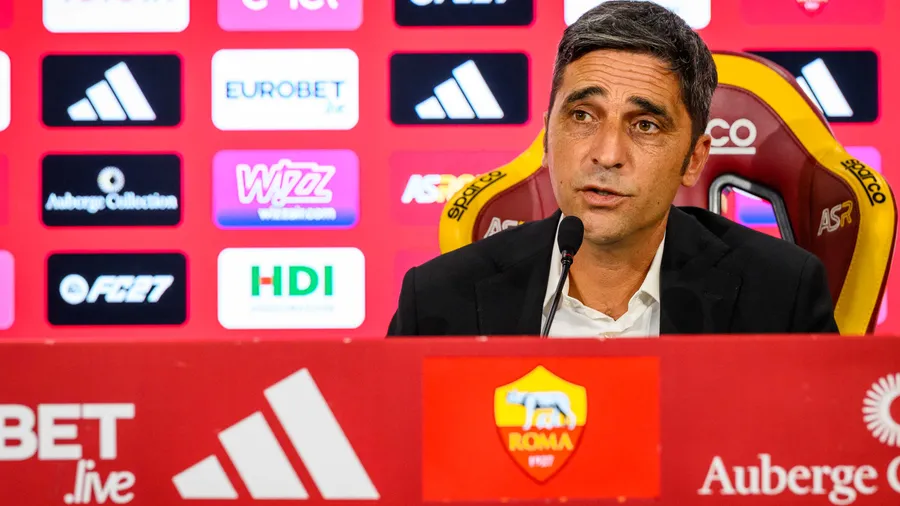
Read what our sporting director had to say below.
Like many other sporting directors, you've had to contend with financial fair play in this transfer window. Did that prevent you from doing any deals? And are you worried about UEFA's verdict on the four-year period 2022-2026?
“Rather than preventing deals, we knew what limitations we had. Sometimes during negotiations we had to come up with new ideas or change things because of those limitations. We knew what our objectives were, what we needed to do, and we succeeded in part. We've lowered our wage bill by 15%, almost €20 million. Other club representatives are speaking to UEFA and they'll tell us what will happen, which we obviously can't know at present.”
Are you happy with what you managed to do in the transfer window? Do you have any regrets?
“We'll see how happy we are at the end of the year. I'm pleased that when I joined we signed four players who were key to us getting back into the Champions League: [Paulo] Dybala, [Lorenzo] Pellegrini, [Bryan] Cristante and [Gianluca] Mancini. When I arrived on 20 June Dybala and Pellegrini didn't have a contract while Cristante and Mancini were about to go into the last year of theirs. Perhaps people had other ideas before, but for me they were our first signings. They have a sense of belonging because they're the longstanding core of the team and I'm grateful to them because they were willing to take a wage cut. They were the first signings we made and the ones I'm most pleased with.
“I don't have any regrets because I think we're happy with all the players we've signed. Often I read about negotiations in real time – you guys were really clued up. I'm pleased with the players we've brought in and they were all really keen to join Roma. Lots of others wanted to come here but for various reasons – such as agreements between clubs and agents – the moves didn't materialise. I've heard people talk about clubs turning Roma down but there were very few who did that, even among the big-name players.”
Roma tried to sign a left winger right at the start but after the Summerville situation – when the player had reached an agreement only for the Saudi Arabians to swoop in – it seems you switched strategy and went for Santiago Castro. Were there other necessities that led to that? Why did the player not join in the end?
“One of our priorities was to strengthen in attack as per the coach's request, but the priorities need to be contextualised. You start lots of negotiations and some of them you manage to complete and others you end and go elsewhere. We didn't redirect funds for the striker. We did bring in a wide forward, [Rodrigo] Mora, who is a different type of player but one we imagine will play in that position. We were looking for another wide player, with more physical attributes, but we didn't redirect funds. Our goal was to strengthen the team. We didn't get that wide player we were after for various reasons but the players who did join were all players we wanted.”
Do you think the squad is fully equipped for the three competitions or have to play, or will you have to adjust something given that the left winger didn't arrive?
“We have three competitions to play in and it's harder with the Champions League because it's a competition that saps a lot of energy. A winger could be a player who can play in two positions. We're a little bit short but we're sure that if we do our jobs well we can find another player in January. We probably are a player short, though.”
What happened with Manu Kone?
“Chelsea made an enquiry on deadline day but there was no official offer, no official approach for the player. Thank you for asking this question because I read that [Gian Piero] Gasperini was apparently ready to resign and made an ultimatum, but there was nothing of the sort.
“Before the game against Fiorentina I said we were very unlikely to sell a player so close to the end of the transfer window. There were some enquiries, some phone calls, but no ultimatum. People imagined something that didn't happen: there was no official bid and no ultimatum. Things got a bit heated for everyone on deadline day.”
A few days ago Gasperini said that 'communications had changed'. What did he mean by that?
“Nothing has changed with UEFA. We knew what our objectives were. I think that's a question for the coach, but as I said earlier it often happens that you change strategy during the transfer window and you move for another player. We need to understand that the UEFA agreement is not only about transfer fees – it's wages as well and other things that are hard to explain here. We need to deal with everything as best we can.”
How does the chain of command work when it comes to decisions in the transfer market?
“I think it's the normal way things are done in all clubs. You have the owners, a sporting director and a coach. Our CEO joined midway through, on 1 August, and we're all on the same page both for incomings and outgoings. I joined the club on 20 June and every day I've spoken to Ryan, to Dan [Friedkin] either in person or on video call. It works like at every club: you share ideas, discuss choices and come out of it with everyone in agreement on the player you want to buy or sell.”
What happened with Zeki Celik? Did you fear the same thing might happen with Pellegrini?
“No, the first player I spoke to was Pellegrini and he loves this club. I never had any doubts – nor did I with Cristante, Dybala amd Mancini. Celik was a special case. It was during the World Cup and communications were difficult. It got to a point where the renewal wasn't happening and then he decided to join Juventus.”
How responsible are you for this summer's transfer dealings?
“If I wasn't responsible, I wouldn't be here. You're asking me to interpret the question. You need to be more explicit [speaking to the journalist].”
I was asking about your role as the person who decides on transfers.
“Am I the one who decides on transfers? You're making me wonder now. I'll have to ask if I'm the one who decides...”
How were you chosen by the Friedkins? What can you tell us about these rather lengthy timeframes to reach agreements with players?
“My move to Roma came about when Atalanta told me I was fired. Ryan Friedkin contacted me and the owners have always been incredibly helpful and supportive, but because of this UEFA agreement they have to cut spending a bit despite their wishes. That's what a football team is. The players need time to settle in and so does a sporting director. It takes a bit of time to get to know each other and figure out how to improve. Sometimes you could do things differently but I'm sure that with time we'll sort everything out.
You said the squad is a little short. Are you considering free agents?
“We're assessing the free agents but we'll deal with that a bit further down the line.”
Gasperini also said, 'If we're buying someone just for the sake of it, it's better to stay as we are.' Why did Roma not manage to sign a left winger? Could you not find a deal with the right conditions?
“We'd identified two or three players we thought were right for us, players we thought could help the team, but we weren't able to sign them for different reasons. There was an agreement with [Jamie] Leweling and with Stuttgart but then he changed his mind. There were other players ready to sign but we weren't convinced by them – not all of us were convinced by them. We'll see if we've done good things.”
You mentioned Leweling, so I'll ask what stalled negotiations for Luiz Henrique. And how did your relationship with Atalanta end?
“Unfortunately there were some problems that prevented us from completing the deal. We'd reached an agreement with the player and the club but we weren't able to tie it up for technical reasons. Lots of things happen during the transfer window and you have to be ready to switch to alternatives.
“I spent four great years at Atalanta. We won the Europa League and my time there was a wonderful experience but now there's Roma. It's a huge honour to come here in the club's centenary year. We're looking forward.”
You've worked with Gasperini before and we've now reached the end of the first transfer window with you two at Roma. How many transfer windows will it take to get close to the level of Inter, who are perhaps the best team in the league?
“This year we've invested in promising youngsters. We've brought in experienced players like [Marten] De Roon and [Leonardo] Balerdi. We've managed to freshen up the squad, building on the core of players we had here. That fits with our idea of football: we believe that talented youngsters need to be supported by a group of strong figures, as we have here. We're not setting any targets on how to reach Inter. We're Roma and we have to prepare for Roma's games the best way possible. It's going to be difficult to play in all three competitions but it's exciting for everyone.”
What did you mean by 'priorities need to be contextualised'?
“The context I was referring to was that when we were after Summerville, we were also after [Nahuel] Molina and Castro. You have to contextualise the moment in which you could seal the deal. We were very interested in Summerville but we were very interested in Castro too. It's a matter of timing. The time it took us to wrap up the Castro deal wasn't enough for Summerville. We were after both. We signed Mora but we didn't get the other type of player, a player like Leweling. The names you cited were true.”
What's your overall assessment of this summer's transfer dealings?
“We'll take stock further down the line. I hope it's a positive assessment but we're not going to say that today. Bergamo and Rome are two different cities but every club is ambitious. It would be a problem if you didn't have ambitions in football. Roma are back in the Champions League after years away. Atalanta have been playing in it regularly in recent years. We must give credit to the owners, the team and the coach for giving Roma the opportunity to play in the competition. I didn't earn it but I found myself in it. Next season I hope to be able to say that I too have earned to be in the Champions League.”

.





..