Tickets
 Shop
Shop









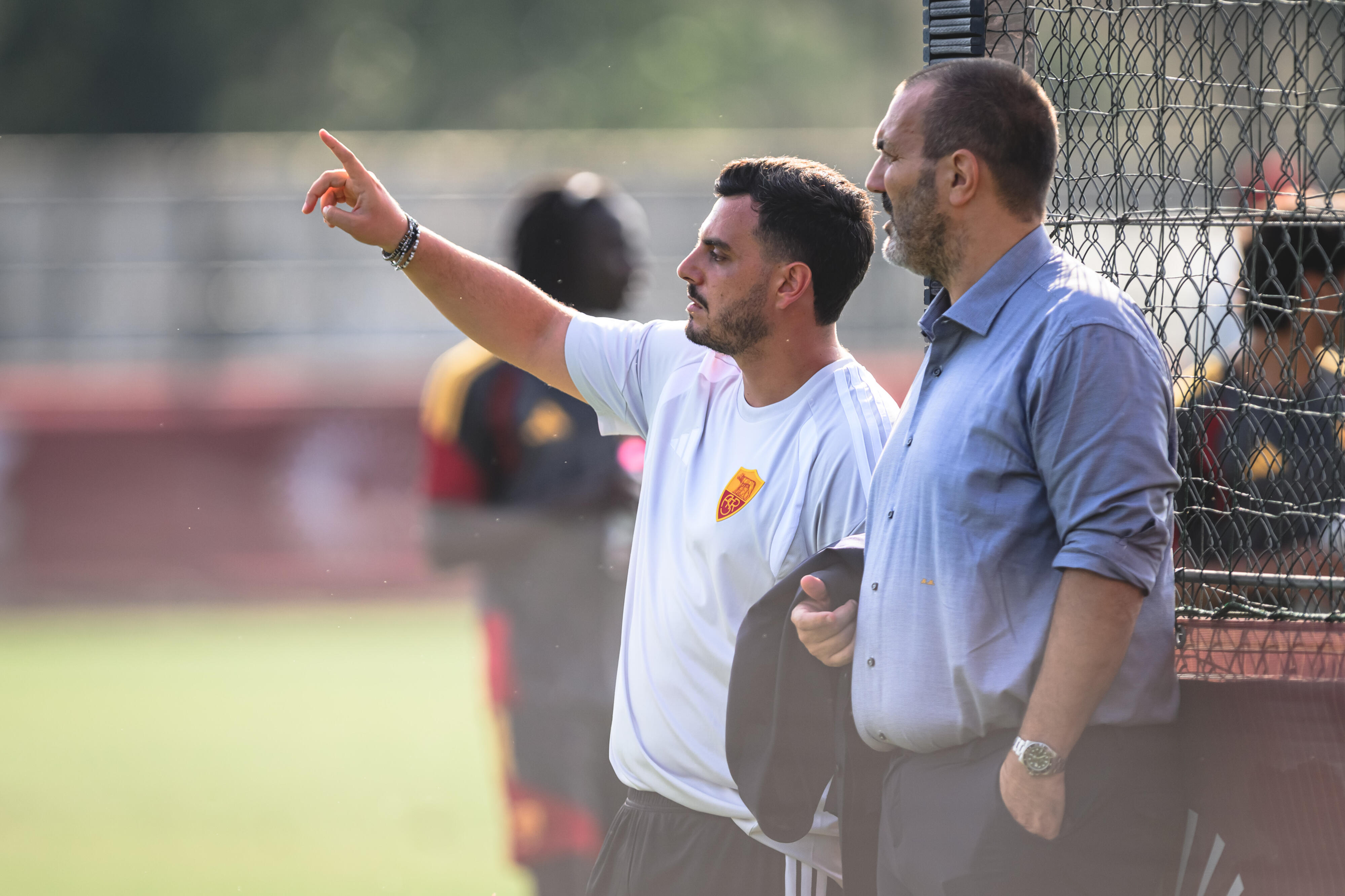
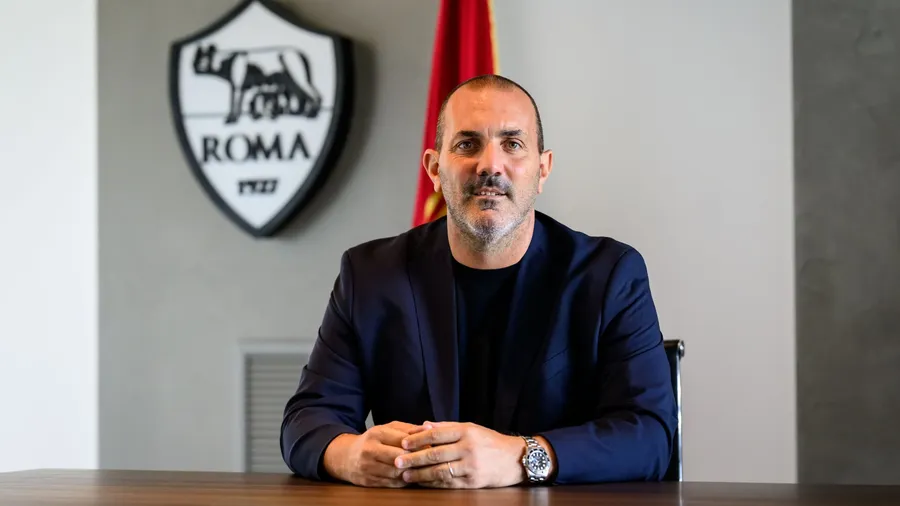
Massimo Margiotta has been Roma’s Academy Director since 9 July 2026, the day his appointment was officially announced.
Born in 1977, the former striker played in Serie A for Udinese and Perugia before moving into youth football management, where he has now worked for many years: “Even though I’m 49, I think I’m one of the longest-serving professionals in this field and now I’m delighted to have joined a top club.”
As someone who works in youth development, what does it mean to join a club like Roma, which has always taken such pride in its academy?
“I’m proud to have joined such an important club, with a youth academy that has a long and distinguished history, and owners who place great importance on developing talent. The experience I gained at Vicenza and Verona was crucial in allowing me to take this next step. It’s a mix of powerful emotions.”
You mentioned Verona, where you had already worked with Roma’s current Sporting Director Tony D’Amico. How did the move to the capital come about?
“D’Amico and I already worked together at Verona. He’s a director who places great importance on youth development and he also delegates responsibility and puts his trust in the people who work with him. That’s important for the development of the entire academy.”
Is the opportunity to continue the work of historic figures in Roma’s youth set-up such as Bruno Conti and Alberto De Rossi more of a source of satisfaction or, above all, a responsibility?
“It’s certainly a huge responsibility. Bruno will always be one of the most important figures in the history of youth development. What he achieved was revolutionary and historic. As well as being extremely fond of Bruno, I have to say over the last 16 years I’ve built up a great relationship with him, which means a lot to me. De Rossi is also a wonderful man who I’ve got to know over the years. As I said, following in the footsteps of two people of their stature is a huge responsibility, but it also motivates me to create something special, just as they did in the past.”
When and how did Massimo Margiotta the football executive emerge?
“It started at Vicenza. When I stopped playing, after my final spell at Barletta hadn’t gone well, I received a call from my friend Paolo Cristallini. He knew me and had seen I had the qualities needed to work with young players. That’s how it all began. I then spent five years in charge of Vicenza before Setti summoned me to Verona in 2017.”
Towards the end of your playing career, had you already imagined yourself in this kind of role?
“Towards the end of your career, no player ever wants to think about stopping. You focus on the present rather than tomorrow, but after Cristallini called me, my perspective gradually changed and now I’m here.”
How does the head of a youth academy need to differ from a sporting director working with the first team?
“The main difference lies in the relationship with time and results. With the first team, results have to come immediately because it’s through results that you build for the future. In the youth sector, however, real success is measured over time. Young players have years to develop and our job is to guide them through every stage of their growth, taking into account their age, education, family life and physical, mental and psychological development. Results matter, but they must always form part of a broader project focused on development and growth. In practice, you’re raising children who aren’t your own, but it’s your responsibility to prepare them for the adult world.”
How do you spot talent in a young player who hasn’t yet fully developed as a footballer?
“Experience means you can recognise a player’s ability from even a single piece of play, but you also shouldn’t overlook the feelings and emotions a young player gives you. We try to identify even just one standout quality and then work to develop it throughout their time in the academy.”
Speaking of talent and young players, Rome and the surrounding region have always provided an extremely rich pool to draw from. What’s your vision there?
“There are a number of clubs in our area doing important work and they’re known throughout Italy. Even though I worked in the north for many years, I established and maintained a number of relationships with clubs in Rome as I looked to recruit players. I know just how valuable these amateur clubs are and how important they are to our work.”
One of the first decisions you made after taking on the role was to appoint Mattia Scala as Primavera coach, and he has achieved good results at the start of the season.
“Mattia is someone we know very well, having spent 13 seasons at the Roma academy, and he has demonstrated quality, expertise and an ability to develop. His appointment, however, also reflects a broader principle: we want our youth sector to be a place where talent can emerge in every role, not just among players. Coaches and other professionals must have the opportunity to develop through a merit-based pathway founded on quality, passion, expertise and a sense of belonging. The Primavera squad, which represents the highest level of our youth sector, must also be the natural culmination of this pathway.”
What is it like working under the watchful eye of Gian Piero Gasperini?
"It means having a huge opportunity for growth every single day. Coach Gasperini built an important part of his background right in youth development, and I believe that makes being able to observe his work up close even more valuable. Watching him coach, understanding how he evaluates players, what he demands, how he develops talent, and how he guides young players into senior football is a continuous learning experience for me. I am fortunate enough to learn directly from a manager who turned the experience gained in youth academies into one of the defining traits of his career."
Taking a step back to your playing career, is there anything in particular you remember about facing Roma as an opponent?
“To be honest, I don’t particularly like looking back at the past. I prefer to look ahead and focus on the work that needs to be done. What I can say, though, is that facing Roma in that period [the late 1990s and early 2000s] meant coming up against a team full of incredible champions. I was fortunate enough to experience a golden era of Serie A first-hand, playing against some truly outstanding players and Roma had plenty of them.”



.





..